
BEYOND THE STEPS AT WINDSOR: SYMBOLISM, SILENCE, BURDEN OF LEADERSHIP
by
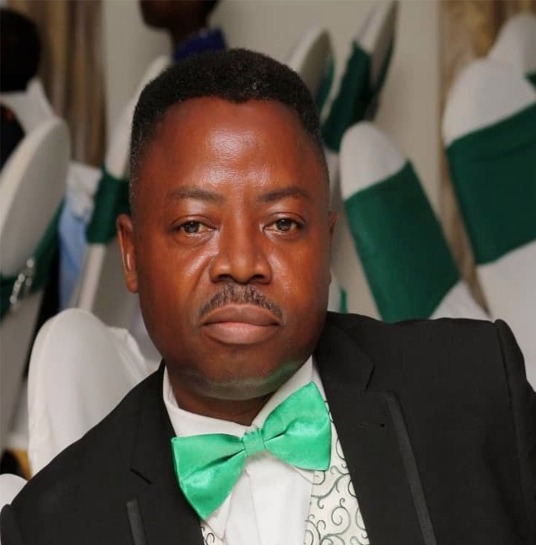
Citizen Dr. Bolaji O. Akinyemi
Names may be similar and faces may resemble, but minds—even when aligned in conviction—process reality differently. It has become necessary to make this distinction clear.
On several occasions, members of the public have attributed my writings and interventions to Professor Bolaji Akinyemi. While such attribution may be flattering, it is inaccurate. The Professor, a globally respected diplomat and elder statesman, has himself had cause to issue disclaimers in this regard.
This piece, therefore, reflects the views of Citizen Dr. Bolaji O. Akinyemi—a concerned Nigerian voice—engaging national issues from a standpoint of civic responsibility, not diplomatic restraint or partisan perspective.
The Windsor visit presents one of such moments where similarity of names must not be mistaken for similarity of interpretation. When a nation is in distress, it does not look to symbolism for survival—it looks to substance.
Yet, in a moment that has since gained quiet traction in media discourse, Professor Bolaji Akinyemi, one of Nigeria’s most respected diplomatic minds, offered a reflection on President Bola Ahmed Tinubu’s recent state visit to the United Kingdom that has left many thoughtful Nigerians searching for deeper meaning.
Speaking on Arise News, the elder statesman drew attention to what he described as a symbolic moment at Windsor Castle—the President’s ascent up a flight of steps. His initial anxiety, he admitted, turned to reassurance as the President climbed steadily, projecting resilience and stability.
On the surface, it is a benign observation. But coming from a man of Professor Akinyemi’s intellectual depth and diplomatic pedigree, it reads less like commentary and more like a parable—perhaps even a carefully coded message. For diplomacy, at its highest level, is often the art of saying much without appearing to say anything at all.
Diplomacy Has Always Spoken Through Symbols—But Never Without Substance
History reminds us that symbolic moments in diplomacy are not new. But crucially, they have almost always been anchored in concrete outcomes. When Richard Nixon visited China in 1972, the handshake with Mao Zedong was more than optics—it signaled the beginning of a strategic realignment that reshaped global geopolitics during the Cold War.
When Ronald Reagan stood at the Brandenburg Gate in Berlin in 1987 and declared, “Mr. Gorbachev, tear down this wall,” the symbolism carried the weight of ideological confrontation that would eventually culminate in the Fall of the Berlin Wall.
Even moments of vulnerability have been historically instructive. When Boris Yeltsin stumbled publicly during state appearances in the 1990s, global observers did not merely see a man—they saw a state struggling through post-Soviet instability. In each of these cases, the body language of leaders mattered—but it was never the message. It was only the medium. The message was always policy. The substance was always strategy.
The Windsor Moment: Climb, Descent, and the Question of Meaning
If climbing steps is now a metric of resilience, what then do we make of the descent? For there was also that moment—equally public, equally symbolic—when the same President, in the presence of King Charles III, appeared visibly shaken while coming down those steps, requiring the steadying hand of his host, as was the overt case in Turkey less than a month ago.
Shall we interpret that too as symbolism? And if so, what does it symbolize? Dependency? Vulnerability? Or the quiet admission of a burden too heavy for one man to carry? These are not idle questions; they go to the heart of leadership perception in a nation already battling a crisis of confidence. Professor Akinyemi is right: optics matter. But optics divorced from outcomes become illusions—and illusions cannot govern a nation.
Nigeria’s Reality: Darkness at Home, Optics Abroad
While President Tinubu mounted the steps of Windsor, millions of Nigerians could not even mount the basic steps of daily survival. Not because they lacked will—but because they lacked power; Electricity. Visibility. Opportunity.
Ironically, many Nigerians did not witness this “symbolic moment” at all. The nation was in darkness—a blackout so pervasive it felt less like a technical failure and more like a metaphor for governance itself. A country of immense promise—unlit. If leadership is to be measured symbolically, then let this also be our symbol: a nation plunged into darkness while its image is polished abroad.
From Symbolism to Statecraft: What Nigerians Are Entitled to Know
This is where the conversation must mature—from observation to obligation. Under the principles of democratic accountability and constitutional governance, Nigerians are not spectators to diplomacy; they are stakeholders. By virtue of the directive principle of state policy and its enabling governing law of the Federal Republic of Nigeria, sovereignty belongs to the people, and all governmental authority—including foreign policy—is exercised on their behalf. Therefore, every state visit must answer to the doctrine of public interest. Nigerians are entitled—legally and morally—to clarity on the following:
1. Economic Deliverables: What binding agreements were reached with the United Kingdom on trade, investment, or industrial cooperation? Are there measurable inflows tied to job creation, infrastructure, or technology transfer?
2. Security Cooperation: In the face of worsening insecurity, what concrete intelligence-sharing or defense partnerships were secured? How do these agreements strengthen Nigeria’s internal security architecture?
3. Migration and Diaspora Frameworks: What are the implications of any migration agreements for Nigerian citizens? Are protections in place, or is Nigeria assuming disproportionate obligations?
4. Energy and Power Commitments: Given Nigeria’s chronic electricity crisis, were there engagements with British institutions or firms on power sector reform, renewable energy, or grid stabilization?
5. Governance and Institutional Support: Were there discussions on judicial reform, anti-corruption frameworks, or institutional capacity building? These are not political questions. They are citizens’ rights questions.
The Danger of Lowered Expectations
Perhaps the most troubling implication of this entire episode is not the symbolism itself—but what it reveals about us. If a nation begins to derive reassurance from the mere physical steadiness of its leader, it suggests a dangerous erosion of expectations. Nigeria cannot afford that. We cannot normalize survival as success. We cannot reduce leadership to optics. We cannot celebrate motion in place of progress.
A Respectful Demand to an Elder Statesman
Professor Akinwande Bolaji Akinyemi remains one of Nigeria’s finest diplomatic minds. His voice carries weight not just because of his experience, but because of his historical role in shaping Nigeria’s foreign policy architecture. Which is precisely why this moment calls for more. Not less.
This is a respectful but firm call on him—as a custodian of Nigeria’s diplomatic tradition—to go beyond symbolic interpretation and provide the nation with a substantive diplomatic briefing. Nigeria needs his voice—not in parables, but in clarity. Not in gestures, but in guidance.
Conclusion: The True Measure of Leadership
In the final analysis, the true measure of leadership is not how a President climbs steps at Windsor Castle. It is how he lifts a nation out of darkness. If the State cannot provide power, the people will turn to solar. If governance fails, citizens will improvise survival.
But let it be clearly stated: Adaptation is not governance. Survival is not progress. Symbolism is not statecraft. Nigeria deserves more. And until that “more” is delivered, every step climbed abroad will remain overshadowed by a nation still struggling to stand at home.
Citizen Bolaji O. Akinyemi
Founding President, PVC-Naija
Chairman, Board of Trustees
Apostle & Nation Builder
Dr. Bolaji O. Akinyemi is an Apostle and Nation Builder. He’s also President Voice of His Word Ministries and Convener Apostolic Round Table. BoT Chairman, Project Victory Call Initiative, AKA PVC Naija. He is a strategic Communicator and the C.E.O, Masterbuilder Communications.
Email:bolajiakinyemi66@gmail.com
Facebook:Bolaji Akinyemi.
X:Bolaji O Akinyemi
Instagram:bolajioakinyemi
Phone:+2348033041236
Sad, but very weighty!
UNADULTERATED TRUTH WELL PRESENTED IN AN ILLUMINATING MANNER!
Good write up sir. We need more of this article, Christians needs to know their right first, secondly we need…
This is the heart of the TRUTH well spoken, and the Truth cannot be covered with refuse of lies as…
Great piece! I understand President Tinubu could do more but in the circumstances he's not doing quite badly. We need…